The BYD Seal battery: what it is worth, year by year
BYD Seal, since 2023, pack of about 82.5 kWh. Versions and capacities, manufacturer warranty, expected state of health, possible battery lease and the cost of a failure.
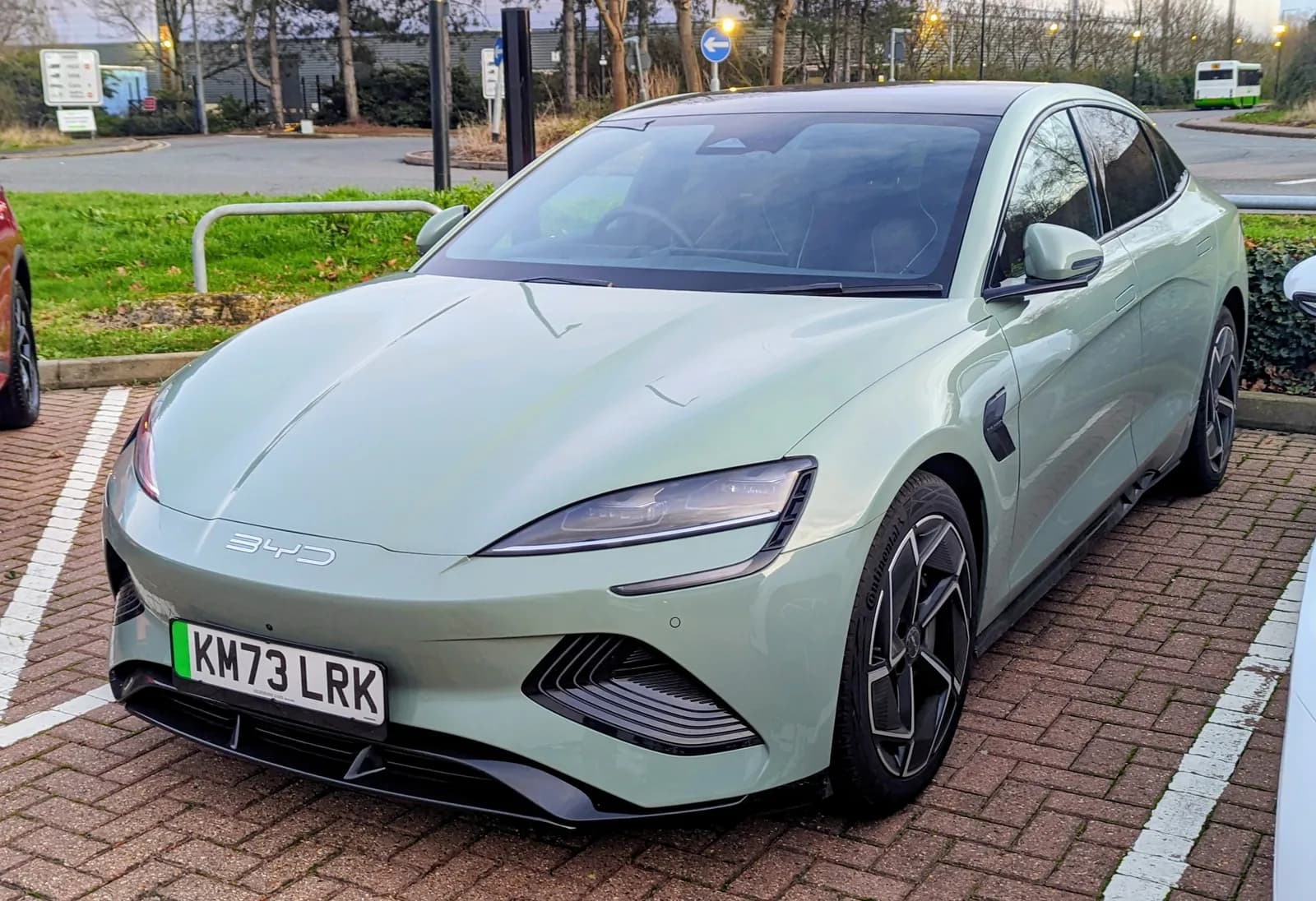
Indicative estimate, excluding diagnosis.
Is this Seal still under warranty?What is this car’s battery worth?
Remaining warranty, expected state of health, battery lease and cost of a failure. All at once — and nothing you enter leaves your browser.
We check, we don’t certify. The date of first registration is shown in box B of the V5C logbook. The state of health given is a range calculated from the battery’s age, mileage and chemistry: only a measurement on the vehicle gives a figure.
Battery versions of the BYD Seal
A model sold over several years does not have the same battery from start to finish, and two versions are often sold side by side. Identify yours: capacity and chemistry change the range, the expected degradation and the cost of a replacement.
- All versionssince 202382.5 kWhLFP
battery sold with the car
The expected state of health of a BYD Seal battery
Three model years of this car, at the average French annual mileage of 9,321 miles, each with its chemistry. These ranges describe where a comparable battery usually sits, not yours: use, climate and charging habits spread the fleet widely.
- 2023 model year90 to 97%3 years, 27,962 miles, LFP chemistry
- 2025 model year94 to 100%1 year, 9,321 miles, LFP chemistry
- 2026 model year98 to 100%under a year, LFP chemistry
For a figure rather than a range, you need a measurement on the car. What state of health means and how it is measured.
What the energy costs per 100 miles
Charged at home, a BYD Seal uses between £7.03 and £9.64 of electricity per 100 miles.
By comparison, a recent petrol car averages 38.7 mpg (7.3 L/100 km) in real-world use: about £20.30 of fuel per 100 miles, at the average price of unleaded petrol (£1.728 per litre on 2 November 2026).
Bottom of the range: the WLTP official consumption, from 3.4 to 3.7 miles/kWh depending on the version. Top: 25% more, the measured gap between official figures and real-world use. Electricity at £0.2632 per kWh, the Ofgem price cap.
Charging at a public charge point: prices vary too much from one operator to another to be given here.
Compare the cost of every modelSources: consumption from the manufacturer or the European registration database; electricity: Ofgem Energy Price Cap, 1 October to 31 December 2026, direct debit, Great Britain average, no VAT (announced 26 August 2026); real-world gap: TNO 2025 and ICCT 2025; petrol: JRC 2025 and weekly road fuel prices from the Department for Energy Security and Net Zero (DESNZ). Checked on 21 September 2026.
Charging at home: a night on a plug
Plugged in for 8 hours on a 3-pin plug, a BYD Seal adds between 50 and 70 miles; on a 16 A commando socket, between 80 and 110 miles, depending on the version and how it is driven.
Every model compared, the cable to check and what installation involvesAdvertisement
Specifications and price ranges given as an order of magnitude, still being confirmed with garages. Only a price given after diagnosis is binding.
The BYD Seal battery
Sold since 2023, with a pack of about 82.5 kWh.
The BYD Seal pack does not lend itself to module-by-module repair. A diagnosis is still worthwhile: the fault often lies in an ancillary component rather than the pack itself.
Find out what your Seal is worth
The model, the date of first registration and the mileage are all it takes: remaining warranty, expected state of health, possible battery lease and the cost of a failure. Nothing is sent, the calculation runs in your browser.
Check this Seal